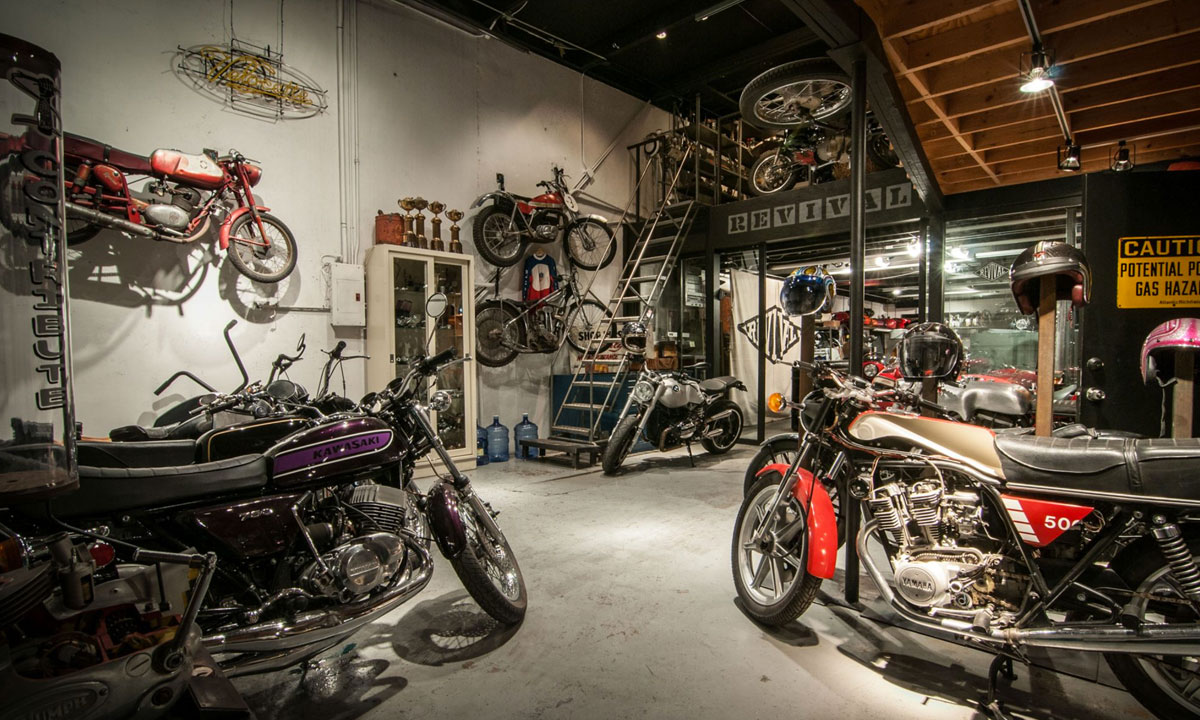
Walk into almost any independent workshop today, whether it’s turning wrenches on family sedans or rebuilding carburettors on a vintage twin, and you’ll hear some version of the same complaint: the vehicles keep getting harder, the customers keep getting more demanding, and the margins keep getting thinner.
That’s not an exaggeration. Cars now roll off the line with dozens of onboard computers, sensors that need calibrating after a simple windscreen swap, and software that varies not just by make but by trim level and model year. Bikes have their own version of the same problem — a shop that services Ducatis, Triumphs, and a customer’s restored CB750 in the same week needs to hold three completely different knowledge bases in its head, often with none of the parts or diagnostic support talking to each other.
Add in customers who Amazon and Uber have trained to expect instant updates, transparent pricing, and text-message convenience, and you’ve got two industries under a very similar kind of pressure. The workshops that are pulling ahead aren’t the ones with the fanciest lift or the biggest square footage. They’re the ones that have figured out how to run the business side as tightly as they run the technical side.
Auto Repair: From Clipboards to Connected Systems
For years, the independent auto repair shop operated on a patchwork of habits: a whiteboard for scheduling, a filing cabinet for repair orders, a phone call to the parts store, and a wealth of institutional knowledge stored in the minds of those who had been there the longest. That approach worked fine when cars were simpler, and customers were more patient. It doesn’t hold up as well now.
Three shifts in particular have changed how independent shops operate day to day.
-
Digital vehicle inspections
Instead of a technician scribbling notes on a checklist that a customer never sees, techs now walk the car with a tablet, photograph or video the brake pads, the tie rod ends, the oil that’s clearly overdue for a change, and send it straight to the customer’s phone.
That does two things at once:
- It gives the shop a documented, timestamped record of what was actually found.
- It gives the customer something dealerships have used for years to build trust, and that is visual proof.
Shops that have adopted this report have noticeably fewer arguments over estimates, simply because the customer isn’t just taking someone’s word for it.
-
Online parts ordering
Instead of a service advisor phoning three different suppliers to find the right control arm at the best price, shops are now ordering directly through online platforms integrated into their own systems – checking availability and price across suppliers in seconds rather than making four phone calls and waiting on hold. That alone has cut hours out of a technician’s week that used to go to nothing but chasing parts.
-
One connected operational layer
The piece tying all of this together is shop management software. The important layer that connects scheduling, estimates, repair orders, parts, and invoicing so they’re not living in four separate systems that someone has to manually reconcile at the end of the day.
In practice, that looks like:
- A customer books online, and the appointment flows straight into the schedule.
- A tech finishes an inspection, and the findings flow into an estimate.
- The estimate gets approved, and it becomes a repair order with parts already tied to it.
- The job’s done, and the invoice is generated from the same data instead of being rebuilt from scratch.
That’s not a flashy feature, but it’s the difference between a service advisor spending their afternoon on data entry and spending it talking to customers. It’s a big part of how independent shops have closed the experience gap with dealerships – not by getting bigger, but by getting less disorganised. If your operations still look like a filing cabinet and sticky notes, that’s generally the first upgrade that pays for itself, simply because so much of the daily admin overhead disappears once everything is talking to the same system.
Motorcycle and Powersports Shops: Solving a Different Version of the Same Problem
Powersports workshops face a similar squeeze, but the specifics are their own animal. A car shop might specialise in one or two brands. A motorcycle shop is far more likely to see a Harley, a Yamaha, a Ducati, and someone’s home-built cafe racer roll through the same week, and each of those brings its own parts catalogue, service intervals, and diagnostic quirks. That kind of variety is part of what makes the industry fun, but it’s brutal in the back office if you’re still running things off paper tickets and a filing system built for one brand at a time.
Dealer Management Systems Built for a Multi-brand Reality
Picture a shop running five brands off paper tickets and a shared spreadsheet. Every time a technician needs a part number, someone has to remember which manufacturer’s catalogue to check, then call around to confirm stock, then hope the invoice line item actually matches what got installed. A quiet Tuesday might survive that system.
A pre-season rush, when six customers drop off winter-stored bikes on the same morning, does not happen because parts get ordered twice, tickets get misplaced, and the shop ends up quoting jobs from memory instead of from data.
That’s where powersports-specific dealer management systems have quietly become essential. Platforms like Lightspeed EVO and DX1 were built specifically around the reality of multi-brand dealerships and independent shops, and they changed the shape of that week entirely. In practice, a service job moves through the system like this:

- A bike comes in, and the VIN or model lookup pulls the correct spec sheet and service history instantly, even if it’s a brand the shop only sees a handful of times a year.
- A tech builds the estimate, and the parts lookup checks stock and pricing across manufacturers instead of one supplier at a time.
- The estimate is approved, and the parts order goes out automatically, tied to that specific repair order rather than a sticky note on the parts counter.
- The job is finished, and the invoice pulls straight from the same ticket, so nothing gets billed from memory or gets missed entirely.
That’s the real upgrade for a multi-brand powersports shop: less time spent reconciling five different systems in five different formats, and more time actually spent working on bikes.
Parts Databases, and Workflow Tools
Alongside a DMS, motorcycle-specific parts databases have made it far easier to cross-reference OEM and aftermarket parts across brands, which matters enormously when you’re servicing five different marques and can’t afford to have a tech guessing at part numbers.
Workflow tools have followed a similar path to parts sourcing, shifting away from generic templates toward systems that recognize aspects such as seasonal storage preparation, pre-season safety inspections, and the reality that a significant portion of powersports work is tied to the riding season rather than being evenly distributed throughout the year.
None of this replaces the physical side of the trade, of course. A well-organised garage with the right tools still matters just as much as it ever did. This rundown of the essential tools every moto geek should have on hand serves as a good reminder that torque wrenches, proper stands, and a decent multimeter are here to stay, regardless of how advanced your software becomes. What’s changed is everything sitting around that physical work, such as the scheduling, the parts sourcing, the customer communication, which used to run on instinct and is now running on systems built for exactly this kind of complexity.
The Common Thread
Strip away the industry-specific details, and both stories are really the same story. Independent shops, whether they’re aligning a hatchback or rebuilding a top end on a two-stroke, are moving away from disconnected tools and paper trails and toward operations where the scheduling, the estimate, the parts order, and the invoice all live in one connected system instead of four disconnected ones.
That shift hasn’t been about outspending the competition. A one-bay shop with a smart digital setup can now offer a customer experience that a decade ago only a dealership with ten times the staff could pull off. The workshops pulling ahead right now aren’t necessarily the biggest on the block. They’re the ones who stopped treating “the business side” as separate from “the wrench side” and connected the two.