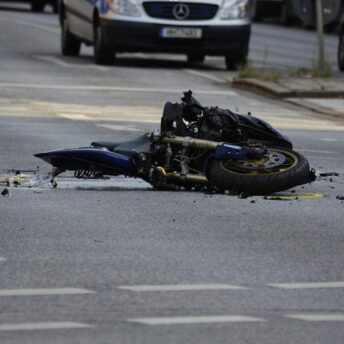
Motorcyclists account for a disproportionate share of traffic fatalities on American roads. According to NHTSA’s 2022 traffic safety data, motorcyclists are approximately 24 times more likely to die in a crash per mile traveled than passenger car occupants — a sobering figure that puts Atlanta’s congested highways and unpredictable weather patterns in sharp relief. Georgia consistently ranks among states with higher per-capita motorcycle fatality rates, and metro Atlanta’s combination of aggressive highway merging, dense urban intersections, and frequent construction zones creates a genuinely elevated risk environment for riders.
What makes this especially pressing is that the moments immediately following a crash often determine everything: whether a rider receives fair compensation, whether evidence survives, and whether legal options remain open or quietly disappear. Insurance companies move quickly, and adjusters are often gathering information before injured riders have left the emergency room.
This guide walks through the critical decisions and actions that follow a motorcycle accident in Atlanta — from the scene itself through Georgia’s specific legal landscape, the role of legal counsel, and how riders can reduce their exposure to these risks in the first place.
—
What to Do Immediately After a Motorcycle Accident
The instinct after a crash is to get up, assess damage, and try to sort out what happened. That instinct isn’t wrong, but the order in which things happen in those first minutes and hours carries real consequences.
First, prioritize physical safety. Move out of active traffic if you can do so without worsening an injury. Call 911 regardless of how minor the crash appears — adrenaline commonly masks pain, and injuries like internal bleeding or traumatic brain injury may not present symptoms immediately. A police report also creates an official record of the incident, which becomes foundational if a claim is later disputed.
Document everything you can while still at the scene. Photograph the position of all vehicles, road markings, debris, skid marks, traffic signals, and any visible damage. If there are witnesses, collect their contact information before they leave — bystanders rarely reach out later on their own. Note the lighting conditions, weather, and any road hazards that may have contributed to the crash.
Consider a scenario that plays out regularly: a rider is clipped by a car that drifts across a lane line on I-285 during rush hour. The car’s driver seems cooperative at the scene, and both parties agree it was a minor incident. By the next morning, the driver’s insurer has logged a claim with a version of events that places the rider at partial fault, and the rider hasn’t yet spoken to anyone about their legal options. The window to shape that narrative was open for hours and has now narrowed considerably.
Seek medical evaluation promptly, even if you feel fine. A documented medical visit creates a direct record linking the accident to any injuries — a gap in that timeline gives insurers room to argue that injuries arose from something unrelated.
Georgia’s statute of limitations for personal injury claims is generally two years from the date of injury under O.C.G.A. § 9-3-33. That may sound like ample time, but evidence degrades, witnesses’ memories fade, and surveillance footage is typically overwritten within days or weeks. Acting early preserves options; waiting forecloses them.
—
Common Causes and Contributing Factors in Atlanta Accidents
Atlanta’s accident causes mirror national patterns in some ways but diverge in others that matter for riders specifically navigating this metro area.
Driver inattention and failure to yield remain the leading contributors to motorcycle collisions nationally, and Atlanta’s density amplifies this. Left-turn accidents — where a vehicle turning left strikes an oncoming motorcycle — are among the most common crash types. The motorcycle’s smaller profile makes it harder for drivers to judge approach speed accurately, particularly at intersections with partial sight-line obstructions.
Road conditions in Atlanta present challenges that go beyond weather. The city’s infrastructure includes aging pavement with potholes, raised expansion joints on bridge decks, inconsistent lane markings in high-construction corridors, and debris accumulation on surface streets after rain events. A tire-sized pothole that a car handles without incident can launch a motorcycle rider into traffic.
Weather compounds these hazards in ways that matter seasonally. Georgia’s summer thunderstorms can transform roads within minutes, and the clay-heavy soils in metro Atlanta mean runoff creates unexpectedly slick road surfaces before rain actually begins — oil residue lifts and suspends in the first few minutes of light rainfall before washing away. Riders unfamiliar with this pattern often encounter dramatically reduced traction without expecting it.
Highway merging behavior on corridors like I-75, I-85, and I-285 creates high-speed scenarios where motorcycles in blind spots face abrupt lane changes. Atlanta’s interchange density — the junction of I-75 and I-85 through downtown is one of the busiest in the Southeast — means these situations repeat dozens of times on any given commute.
Understanding these contributing factors isn’t just useful background. When causes like inadequate road maintenance or negligent construction zone signage are involved, the liable party may extend beyond another driver to include government entities or contractors, which requires a different legal approach entirely.
—
Key Legal Considerations After a Motorcycle Accident in Georgia
Georgia’s legal framework for motorcycle accidents involves several specific provisions that affect how claims proceed and what compensation riders may ultimately recover.
Georgia Helmet and Insurance Laws
Georgia requires all motorcycle operators and passengers to wear helmets under O.C.G.A. § 40-6-315. This matters legally because helmet use — or the absence of it — can directly influence how damages are calculated if an injury involves head trauma. A rider not wearing a helmet at the time of an accident may face arguments that they contributed to the severity of their own injuries, which connects directly to how comparative fault is applied (addressed in the next section).
On the insurance side, Georgia requires motorcycle operators to carry minimum liability coverage: $25,000 per person and $50,000 per accident for bodily injury, plus $25,000 for property damage. Uninsured/underinsured motorist (UM/UIM) coverage is not mandatory for motorcycles under Georgia law, but it carries significant practical value — a meaningful share of drivers on Georgia roads carry only minimum coverage or none at all. Riders who elect to waive UM/UIM coverage and are later struck by an uninsured driver may find themselves with injuries and no viable recovery source.
Understanding Fault and Negligence in Atlanta Accidents
Georgia follows a modified comparative negligence standard under O.C.G.A. § 51-12-33. In practical terms, this means that if a rider is found to be partially at fault for an accident, their recoverable damages are reduced proportionally — but if their fault reaches 50% or more, they recover nothing.
This rule creates real stakes around how fault is characterized early in the claims process. An insurer that successfully argues a rider was speeding, lane-splitting, or not maintaining proper lookout can shift the percentage of fault and reduce its payout accordingly. Georgia does not permit lane-splitting, and evidence of the practice, even if it wasn’t causally related to a crash, can be introduced to influence comparative fault findings.
Establishing and documenting the other party’s negligence — through witness statements, camera footage, accident reconstruction, and physical evidence — is what determines whether a rider’s comparative fault percentage stays low enough to permit meaningful recovery.

—
The Role of an Atlanta Motorcycle Accident Attorney and How to Choose One
The legal mechanics described above — comparative fault calculations, UM/UIM elections, helmet law implications, government entity claims — rarely resolve themselves in a rider’s favor without advocacy. This is where qualified legal counsel becomes practically significant rather than merely optional.
Attorneys handling motorcycle accident cases typically work on a contingency fee basis, meaning no upfront cost to the rider, with fees drawn from any eventual settlement or verdict. Their core function involves several parallel tracks: preserving and analyzing evidence, managing communications with insurers, identifying all potentially liable parties, and building the documentation needed to support a damages claim — including medical costs, lost wages, diminished earning capacity, and pain and suffering.
When you’re looking for help after a motorcycle accident in Atlanta, the selection criteria matter more than most people realize. Attorneys who concentrate specifically in motorcycle cases understand the distinctive dynamics of these claims — including the bias some jurors carry toward motorcyclists — and can counter those narratives with evidence rather than anecdote.
Practically speaking, riders evaluating attorneys should look for demonstrated experience with motorcycle cases specifically, familiarity with Georgia’s comparative fault framework, and willingness to explain the litigation timeline and realistic case value without overpromising. An attorney who provides a specific settlement number in the first conversation without having reviewed the evidence is telling you something about how they operate. Transparent communication about how fault assessment, insurance coverage, and injury documentation interact in a specific case signals genuine expertise more reliably than any marketing claim does.
—
Best Practices for Preventing Motorcycle Accidents in Atlanta
Given Atlanta’s specific risk profile, prevention isn’t just general safety advice — it’s calibrated to the conditions that consistently produce collisions here.
Rider education beyond the basic license requirement makes a measurable difference. The Motorcycle Safety Foundation’s (MSF) advanced courses address emergency braking, swerving technique, and hazard recognition in ways that standard licensing tests don’t cover. Riders who complete these programs develop responses that become instinctive in high-stress situations, which is when they matter most.
Visibility gear takes on added significance in urban Atlanta driving. High-visibility jackets and helmets with reflective elements reduce the perceptual gap that makes motorcycles difficult for drivers to accurately place in traffic. This doesn’t transfer fault to riders for being hit — but it does meaningfully reduce the probability of the encounter happening at all.
Route awareness is underutilized as a risk-reduction tool. Atlanta’s most dangerous corridors shift by time of day — the interchange zones that see aggressive lane changes during rush hour may be entirely manageable at midday. Riders who develop route patterns based on traffic conditions rather than shortest distance accumulate significantly less exposure to the scenarios that produce serious crashes.
Technology is also advancing into this space. Anti-lock braking systems (ABS) on modern motorcycles reduce stopping distance and prevent loss of control during emergency braking on wet pavement — the exact condition that catches riders off guard during Atlanta’s early-rain surface hazard. For riders choosing new bikes or upgrading, ABS availability is worth prioritizing as a genuine safety feature rather than an optional add-on.
The most durable risk reduction comes from treating riding as a skill that degrades without practice — refresher training, updated gear, and honest self-assessment of whether conditions on a given day match current ability levels.