The Ride, The Risk, and the City
There’s a certain rhythm to riding through a city that never really slows down. Engines hum between traffic lights, tires trace imperfect asphalt, and every intersection carries a quiet sense of unpredictability. In places like Chicago, where congestion, tight lanes, and constant motion define the streets, riding demands more than a love of the road. It demands awareness and instinct.
For many riders, especially those drawn to stripped-down machines and raw builds, the appeal lies in that connection. No distractions, no excess, just the road and the response of the bike beneath you. But cities change that relationship. The margin for error narrows. One driver glancing at a phone, one sudden lane shift, one missed blind spot, and everything changes in a second.
Urban riding carries a different weight than open-road riding. In quieter areas, mistakes sometimes leave room for recovery. In dense traffic, that buffer disappears. Impacts hit harder, reactions come faster, and the consequences last far longer than the moment that caused them.
Riders who navigate cities like Chicago know the risks are layered. Traffic patterns, weather shifts, and aggressive driving habits intersect in ways that make serious crashes more likely and their aftermath more complicated. When those crashes happen, the experience does not end when the bike hits the ground.
The Moment Everything Changes
It rarely feels dramatic at first. There is no slow motion, no warning soundtrack. Just a split second where something is off. A car moves where it should not. A gap disappears. The line you planned to take is suddenly gone.
Then impact.
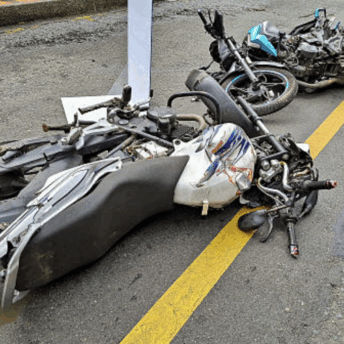
What follows is often a blur. The noise fades in and out. The bike is no longer beneath you. You’re on the ground, trying to understand what happened while the city keeps moving around you. People gather, traffic shifts, someone asks if you’re okay, but even that question can feel distant.
Adrenaline masks more than most riders expect. Injuries do not always register immediately. You might stand up, brush it off, and believe you avoided the worst. That assumption often unravels later, sometimes hours or days after the crash, when the real extent of the damage begins to surface.
In dense urban environments, the aftermath moves quickly and chaotically. Emergency services, bystanders, and drivers all become part of the scene. Details get missed. Conversations happen too fast. Important information slips away.
For many riders, this is the point where instinct takes over again, but this time it is not about controlling the bike. It is about reacting to pressure, confusion, and uncertainty. In those first moments, the decisions made can carry more weight than expected.
The First Mistakes Riders Make After a Serious Crash
In the moments after a serious crash, most riders rely on instinct. The problem is that instinct is built for the ride itself, not for everything that follows. What feels like a reasonable reaction in the moment can create complications that last far longer than the crash.
One of the most common mistakes is underestimating injuries. Standing up and walking away can feel like proof that everything is fine, especially with adrenaline still in control. Hours later, pain sets in, mobility changes, and what seemed minor begins to interfere with daily life. Delaying medical attention can also mean missing early documentation that becomes important later.
Another issue comes from the scene itself. In busy cities, everything moves fast. Riders may speak too quickly, agree to things they have not fully processed, or fail to gather basic details. Witnesses leave, vehicles are cleared, and small gaps in information turn into larger problems down the line.
There is also a tendency to assume the process will be straightforward. Many riders believe insurance will sort things out without much effort. In reality, serious crashes in dense urban environments often involve traffic conditions, liability disputes, and long-term injury assessments. Without a clear understanding of how these factors come together, it becomes easy to fall behind.
This is where many riders realize they need help with serious bike accident claims in Chicago, especially when the situation becomes more complicated than expected. In a city where traffic patterns, legal processes, and insurance dynamics collide, early missteps can shape the entire outcome.
The difficulty is that these mistakes rarely feel like mistakes at the time. They feel like quick decisions made under pressure. Only later, when the full impact of the crash begins to unfold, do their consequences become clear.
Why Serious Motorcycle Accidents Are Different
Motorcycle accidents leave a different kind of impact than most other road incidents. There is no protective frame, no airbags, and no barrier between the rider and the road. When a collision happens, the body absorbs forces that would otherwise be distributed through a vehicle’s structure.
This difference shows up immediately in the severity of injuries. Fractures, head trauma, and soft tissue damage are more common, and recovery often takes longer than expected. Even injuries that seem manageable at first can turn into long-term limitations that affect work, mobility, and daily routines.
The financial side follows quickly. Medical care alone can become overwhelming, especially when treatment extends beyond an emergency visit into rehabilitation, therapy, or ongoing monitoring. Time away from work adds another layer of pressure, and many riders are left trying to balance recovery with financial uncertainty.
There is also the question of how these cases are viewed and handled. Motorcycle accidents often face extra scrutiny when responsibility is being assessed. Assumptions about rider behavior, speed, or risk-taking can shape how a situation is interpreted, even when those assumptions are inaccurate. That can complicate the process of establishing what happened and who is at fault.
All of this creates an aftermath that is rarely simple. Physical recovery, financial strain, and the effort to clarify responsibility overlap in ways that make serious motorcycle crashes far more demanding than many riders anticipate.
Urban Riding Realities: Why Cities Change Everything
Riding through a major city introduces a different set of variables that go beyond skill or experience. Traffic density alone creates constant pressure. Cars move unpredictably, lanes tighten without warning, and visibility is often limited by everything from buses to parked vehicles edging into the street.
In cities like Chicago, these conditions are amplified by volume and pace. Intersections become high-risk zones where multiple decisions happen at once. Drivers rush to beat lights, pedestrians cross late, and riders are left navigating a space where hesitation and timing carry real consequences. Even a routine commute can turn complex within seconds.
Another factor is how little room there is for correction. On open roads, a mistake might be recoverable with space and time. In a city, that margin disappears. A sudden stop or misjudged turn can immediately involve other vehicles, leaving no opportunity to adjust or escape.
These patterns are reflected in broader data as well. Insights from recent urban motorcycle safety research show how city infrastructure and traffic density directly contribute to higher injury risks for riders. The combination of congestion and split-second decision-making creates an environment where even experienced riders face elevated risk.
What makes urban accidents particularly challenging is not only how they happen, but how they unfold afterward. Multiple vehicles, conflicting accounts, and complex road layouts can make it harder to establish what took place. In a fast-moving city environment, the crash is only one part of a much larger situation.
The “Second Impact”: What Happens After the Hospital
Leaving the hospital often feels like a turning point. The immediate danger has passed, the initial treatment is done, and there is a sense that the hardest part is over. For many riders, this is where a different kind of pressure begins to build.
Recovery rarely follows a straight path. Pain can linger or intensify, mobility may not return as quickly as expected, and routine tasks start to feel unfamiliar. Follow-up appointments, physical therapy, and ongoing evaluations become part of daily life. What seemed like a temporary disruption can stretch into weeks or months.
At the same time, financial strain begins to surface. Medical bills arrive in stages. Time away from work reduces income, sometimes completely. For riders who rely on physical ability in their jobs, the uncertainty grows even heavier. The focus shifts from short-term healing to long-term stability.
Insurance adds another layer of complexity. Conversations that appear simple at first often involve detailed questions, documentation, and decisions that carry lasting consequences. Without a clear understanding of how these processes work, it becomes easy to accept outcomes that do not fully reflect the reality of the crash.
There is also the mental side of recovery. Confidence can take a hit after a serious accident. Returning to the road is not just a physical decision but a psychological one. Some riders hesitate, others push too quickly, and many find themselves somewhere in between, trying to reconcile what happened with the instinct to keep riding.

This phase is often overlooked because it lacks the immediacy of the crash itself. Yet it is where the long-term impact takes shape, influencing how riders recover, adapt, and move forward.
Why the Real Fight Starts After the Crash
The moment of impact is immediate, visible, and impossible to ignore. What follows is quieter, but far more complex. Once the initial treatment is over and the visible damage begins to heal, a different kind of process takes over, one that most riders are not prepared for.
This is where timelines stretch. Recovery is no longer measured in days but in months, sometimes longer. Medical evaluations continue, expenses grow, and questions around responsibility become harder to untangle. What seemed clear at the scene can become disputed later, especially in busy urban environments where multiple factors shape how the crash is interpreted.
Financial pressure builds steadily during this phase. Lost income, ongoing care, and unexpected costs create a situation where decisions carry long-term consequences. Accepting a quick resolution might seem like a way to move on, but it can mean overlooking the full scope of what the crash has caused.
There is also a shift in how the situation is handled. Conversations move from immediate response to detailed review. Records, reports, and timelines begin to matter more than first impressions. Without the right approach, it becomes difficult to present a complete picture of what happened and how it continues to affect daily life.
For many riders, this stage feels less like recovery and more like navigating a system that is not always clear or straightforward. The physical injuries may begin to stabilize, but the broader impact of the crash is still unfolding.
Learning From the Aftermath: Riding Smarter, Living Longer
Every serious crash leaves something behind. Not just damage to the bike or the body, but a shift in how a rider sees the road. The same streets feel different. Intersections are approached with more caution. Small details that once went unnoticed begin to stand out.
For many, this awareness becomes part of a long adjustment. Riding does not stop, but it changes. There is more attention to positioning, timing, and the behavior of others on the road. Experience shapes decision-making in ways that only come from living through something that cannot be fully anticipated.
Urban environments reinforce this shift. The constant movement, the unpredictability, and the pressure of traffic demand a different mindset. Riders who reflect on what happened often carry that awareness forward, adapting to conditions instead of simply reacting to them.
This perspective is shared across the riding community, especially in discussions around urban riding challenges, where experience becomes a form of insight. Stories, lessons, and close calls all contribute to a deeper understanding of what it means to navigate city streets on two wheels.
The result is not hesitation, but refinement. A stronger sense of control, a clearer awareness of risk, and a more deliberate approach to every ride.
The Ride Continues—But Differently
Riding never really leaves you. Even after a serious crash, the instinct to get back on the bike remains. What changes is the way the road is understood. Every movement, every decision, every moment in traffic carries more weight than it did before.
The experience reshapes perspective. Risks that once felt distant become tangible. The connection between a single moment and long-term consequences becomes clearer. Riders who go through this kind of aftermath often carry a deeper awareness, not just of how they ride, but of everything that surrounds them on the road.
Cities like Chicago continue to move at their own pace, unchanged by individual experiences. Traffic flows, distractions persist, and unpredictability remains part of the environment. What shifts is the rider’s approach within that space, shaped by what they have seen and what they now understand.
The crash becomes part of the story, but not the end of it. It marks a point where riding evolves from pure instinct into something more deliberate, balancing passion with awareness every time the engine starts again.