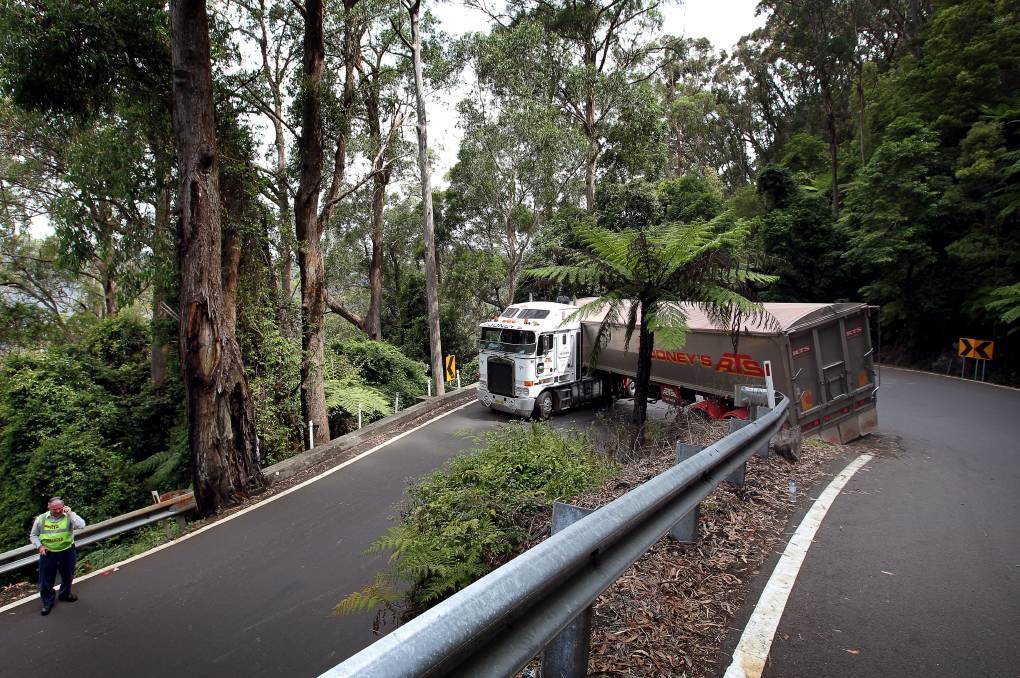
Eighty-five horsepower and three hundred pounds of steel feel like freedom until an eighty-thousand-pound trailer changes lanes without a signal. That’s the raw math of sharing I-10 or I-5 with commercial trucking. A café racer or a stripped-down custom bike handles like an extension of the body — light, responsive, alive under the throttle. A loaded semi handles like a building on wheels, and its driver often can’t see that extension of the body at all. One blink, one radio distraction, one second of lost attention behind the wheel of a rig, and a rider pays with everything. This piece breaks down exactly where the danger lives and what actually protects a rider when the asphalt gets shared with giants.
The Physics Working Against Every Rider Near a Semi
Riding beside a semi isn’t just risky because trucks are big. It’s risky because of specific, predictable physical forces that most car drivers never think about and most riders underestimate until they’ve lived through one.
Blind Spots the Size of a Parking Lot
Truckers call them No-Zones, and they’re not exaggerating. A fully loaded tractor-trailer has blind spots stretching twenty feet in front of the cab, thirty feet behind the trailer, and a full lane-width running down both sides. A motorcycle disappears into those zones almost instantly. Sit next to a trailer’s rear wheels for more than a few seconds and a driver checking mirrors simply won’t register a bike is there. Lane changes happen on a mirror check and a gut feeling, not a shoulder check, and that gut feeling doesn’t account for two wheels.
Wind Buffeting: The Silent Bike-Killer
Anyone who’s passed a semi at highway speed knows the punch of air that hits on approach, followed by the vacuum that tries to suck the bike sideways right after. For a car, it’s an annoyance. For a 400-pound bike carrying a rider at 75 mph, it’s a genuine handling event. The bow wave off the front of a trailer can shove a lightweight machine a foot or more off its line before the rider even processes what happened. Ride a stripped café racer with minimal fairing and thin tires, and that push gets amplified — there’s less mass and less surface stability to fight it. Add a crosswind gusting off the desert near Palm Springs or the Coachella Valley, stack it with truck wake turbulence, and steering becomes a fight instead of a glide.
Road Gators: Shrapnel at Highway Speed
Every rider has seen them scattered along the interstate shoulder — thick strips of shredded truck tire, sometimes called road gators. A blown semi tire doesn’t politely fall to the ground. It can whip loose at speed, bounce, and cartwheel across multiple lanes. For a car, that’s a jarring thump and a scared driver. For a motorcycle, a chunk of steel-belted rubber hitting the front wheel or clipping a rider’s leg at 70 mph is a life-altering impact, full stop. And these blowouts rarely give warning. One second the tire’s fine, the next there’s a wall of debris.
When an aerodynamic gust or a mechanical failure like a tire blowout turns into a serious wreck caused by trucker negligence, the aftermath gets complicated fast — because behind every semi is a logistics company with its own insurance team and its own lawyers already building a defense. Riders hurt in these crashes across California need someone who understands trucking regulations inside and out; bringing in a truck accident lawyer in Palm Springs early on is often what levels the playing field against a corporate carrier’s legal machine. Waiting too long to get that kind of representation can mean losing access to evidence that disappears within days of a wreck.
Defensive Riding Tactics That Actually Keep Riders Alive
Knowing the danger is one thing. Riding smart around it is another. Veteran riders don’t get lucky forever — they build habits that stack the odds in their favor every single time they roll up next to a rig.
Positioning in Traffic
Where a bike sits in the lane relative to a truck matters more than most new riders realize. A few rules that hold up mile after mile:
- Never linger beside a trailer’s rear tires — that’s the deepest blind spot on the entire rig, and it’s also where a tire blowout does the most damage.
- Pass decisively. Get alongside, get past, get visible in the mirror, and get out. Hovering in the transition zone is asking for trouble.
- Ride toward the front third of the lane, slightly offset from center, so headlights and mirror position give the trucker the best shot at spotting a bike before a lane change.
- Watch the trailer’s wheels, not just the cab. Wobble, smoke, or a sagging tire wall are early warning signs of an imminent blowout.
The Trap Between Two Trailers
Nothing eats confidence faster than getting boxed in — one truck ahead, one truck behind, no shoulder room, no escape line. That’s a classic squeeze scenario, and it happens more often on stretches like I-5 through the Central Valley or I-10 heading into the desert, where traffic bunches around freight corridors. The fix isn’t complicated, but it takes discipline:
- Adjust speed early to avoid ever settling into that gap in the first place.
- If caught between trailers, don’t panic-brake. Look for the nearest safe exit — a gap ahead, a shoulder, anything — and commit to it smoothly.
- Keep two hands ready on the controls at all times in this zone. No relaxed cruising posture here.
Braking Distance Reality Check
A loaded semi can’t stop like a sedan, and it definitely can’t stop like a motorcycle. Rigs need well over 500 feet to fully stop from highway speed — more than a football field and a half. Riders sometimes forget the reverse is also true: a bike’s own braking distance changes dramatically with tire condition, road surface, and weight distribution, especially on a custom build running lighter brakes than stock. Following too close behind any truck, assuming there’s time to react, is a bet nobody should take.
The Legal Terrain After a Truck-Related Crash
Here’s where things get ugly for riders, and it’s worth understanding before it ever becomes personal.
FMCSA Rules Exist for a Reason
Commercial trucking runs under strict federal oversight through the Federal Motor Carrier Safety Administration. Hours-of-service limits, mandatory rest breaks, vehicle inspection requirements — all of it exists because fatigue and corner-cutting on freight schedules kill people. When a semi driver blows through those regulations, that violation becomes powerful evidence in a crash investigation. Sound like it matters? It absolutely does.
A serious post-crash investigation should dig into:
- The truck’s electronic logging device (ELD) data, showing exactly how many hours the driver had been on the road.
- Onboard event data recorders, sometimes called the truck’s “black box,” capturing speed and braking in the moments before impact.
- Maintenance and inspection logs, revealing whether that blown tire was a freak accident or a known problem ignored.
- Dispatch records showing whether a trucking company pressured a driver to skip mandated rest.
Why Insurance Companies Target the Rider
Society carries a bias against motorcyclists — the image of the reckless speed demon gets baked into jury pools and claims adjusters alike. Trucking insurance companies know this bias exists, and they lean on it hard. It’s a lot easier to paint a leather-clad rider as the aggressor than to admit a driver on hour fourteen of a fifteen-hour shift drifted out of a lane. That’s not paranoia — it’s standard defense strategy in commercial trucking litigation.
What breaks that narrative is documentation. Photos of skid marks, tire debris, and lane position. Witness statements gathered before memories fade. Preserved ELD and black box data before a company’s legal team can process it — or worse, “lose” it. A rider who understands this dynamic and acts fast on evidence collection puts up a real fight against corporate lawyers built to minimize payouts.
Riding Smart Is the Only Real Insurance
None of this is about fear-mongering or scaring anyone off the highway. Custom bikes and café racers were built to be ridden hard, and that’s not changing. What changes the odds is respect for the sheer size difference at play every time a bike shares pavement with an 18-wheeler — understanding blind spots, reading wind before it reads the bike, keeping distance from tire walls that might already be one pothole from failure. Ride aware, ride visible, and know exactly who to call if a trucker’s mistake ever turns a good ride into a bad one.