Dealerships are busier than they’ve been in years. Electric commuters, weekend riders, people fed up with city traffic — motivations vary, but the pattern is consistent. Still, a motorcycle isn’t a car with two fewer wheels. The consequences of skipping steps are faster and harder than most new buyers expect. Here’s what actually matters before signing anything.
The Right First Bike Matters
This is where most people go wrong.
Walk into any dealership and something like the Kawasaki Z650RS or the Royal Enfield Meteor 350 will catch your eye before you’ve read a single spec sheet. Some of those bikes are manageable for a new rider. Others will punish you, not because of any design flaw, but because the learning curve hasn’t been respected.
The range that’s held up across decades of rider training sits between 300cc and 650cc for beginners. Enough power for freeway merges. Not enough to make a small throttle error catastrophic.
Honda CB500F. Kawasaki Ninja 400. Yamaha MT-03. These aren’t compromise bikes. They’re forgiving without being dull, and riders who spend a year on them come out better for it. Riders who bought a liter-class bike as their first machine tend to come out with different kinds of stories.
Seat height isn’t a vanity metric either. If both feet can’t reach the ground comfortably at a stop, that creates real problems in parking lots, at intersections, on uneven surfaces. Test it in person.
Weight gets underestimated every time. A 480-pound bike that tips over at walking speed is a couple thousand dollars in damage. Pick it up before you fall for it.
California Roads Come With Specific Legal Exposure
Lane splitting is legal in California, the only state where it is. That changes how cars interact with motorcycles, and when something goes wrong, it makes liability disputes more complicated than in most states.
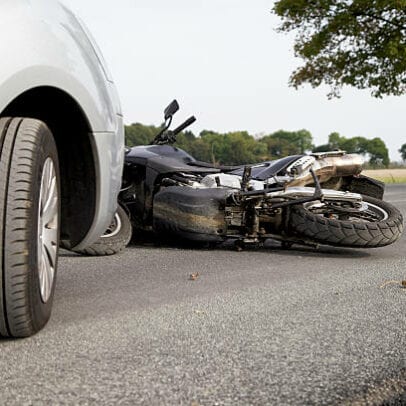
Fault arguments in California motorcycle accidents frequently come down to whether the rider was lane splitting within what the CHP considers reasonable parameters. That’s guidance, not statute, which leaves room for disagreement. A motorcycle accident attorney California regularly handles these disputes, where insurance companies and drivers contest right-of-way during a split. Knowing that this category of legal conflict exists is useful context before you ever get on the freeway.
Gear Is Math, Not Style
The phrase “all the gear, all the time” has been around long enough to feel like noise. It isn’t.
A full-face helmet from a reputable brand, Shoei, Arai, or AGV, runs $400 to $800. It covers your face. An open-face helmet does not. The difference in a forward fall isn’t subtle.
Get a jacket with CE Level 2 armor at the shoulders and elbows. Back protector either built in or added separately. Alpinestars, REV’IT, Dainese all have options at different price points. Boots over the ankle. Gloves rated for abrasion, not just warmth.
A complete kit runs $800 to $1,500 depending on brand. Budget for it with the bike, not as an afterthought.
The Training Has a Point Beyond the License
Every state requires a motorcycle endorsement. Completing the MSF Basic RiderCourse satisfies the skills test in most states and typically lowers your insurance premium too.
That’s not the main reason to take it, though.
The course puts you on a small bike in a controlled environment and builds muscle memory: countersteering, emergency braking, slow-speed balance, hazard response. The skills that matter at 50 mph get built at 15 mph first. There’s no shortcut around that, and no YouTube video replaces it.
Insurance: The Coverage Most Riders Skip
Liability is required everywhere. It covers damage and injury you cause to others. It does not cover your medical bills or your bike.
Comprehensive collision add-on protection for your motorcycle in an accident, a theft, or a weather event. For any bike worth more than $6,000, skipping this is a meaningful financial risk.

The coverage that gets overlooked most often is what applies when the driver who hits you has no insurance, or not enough of it. Understanding the uninsured motorist insurance definition matters here: UM/UIM coverage pays when the at-fault party’s policy can’t cover your losses. In California, a large share of drivers carry minimum coverage. A serious motorcycle injury reaches six figures in medical costs faster than most people expect. Ask your insurer specifically about UM/UIM. Don’t assume it’s automatic.
Used Bikes: What Listings Don’t Tell You
The used market is healthy right now. Prices have stabilized, but due diligence still matters.
Run the VIN through NICB’s VINCheck. It’s free and flags stolen or totaled bikes. Check the title for a salvage or rebuilt designation, because it affects insurance, financing, and resale value.
Look at the chain. Wear and corrosion tell you a lot about how the previous owner maintained the rest of the machine. Check tires for sidewall cracking and cupping on the contact patch. Old rubber is a safety issue regardless of mileage. A tire swap runs $300 to $500 installed, so build it into your offer.
Ask whether the bike has gone down. Look for frame damage, bent levers, asymmetrical scratching. A clean lowside is usually cosmetic. A harder crash can have consequences that don’t show on the surface.
A pre-purchase inspection from a mechanic costs $100 to $150. On anything above $3,000, it’s worth every dollar.
The Part Nobody Wants to Think About
Motorcycles are more dangerous per mile than passenger cars, and the injuries that result tend to be more severe. Traumatic brain injury, spinal damage, fractures. These aren’t abstract risk categories. They show up in emergency rooms and court filings at a rate that puts motorcycles in a different class than most vehicles.
None of that is an argument against riding. It’s an argument for treating every decision in this process, gear, training, insurance, bike selection, as genuinely consequential. Not administrative.