A dedicated motorcycle workshop is more than just a place to store bikes and tools. Where mechanical skill intersects with personal identity. Whether you’re restoring a classic cafe racer, building a custom chopper from the ground up or simply maintaining your daily ride the layout of your workspace will have a direct impact on both productivity and enjoyment. Increasingly, riders are turning to modified shipping containers to find custom shipping solutions for their workshop. These adaptable structures provide a practical base that is capable of supporting just about any mechanical workflow.
Creating a Workshop That Reflects Motorcycle Culture
The perfect motorcycle workshop is a combination of function and personality. While good storage and enough workspace are essential, the overall design must also embody a rider’s love of motorcycles. Old school signs, pictures framed from road trips, racing memorabilia and custom artwork can make a plain garage a one of a kind place.
The arrangement needs to fit the way the owner works. If you primarily work on restoration projects, routine maintenance or custom fabrication, designing your workshop around the tasks you do most often increases comfort and efficiency. Dedicated areas for tools, parts and equipment and clear paths between workstations add up to a more productive work environment.
Workshop concepts with an industry twist
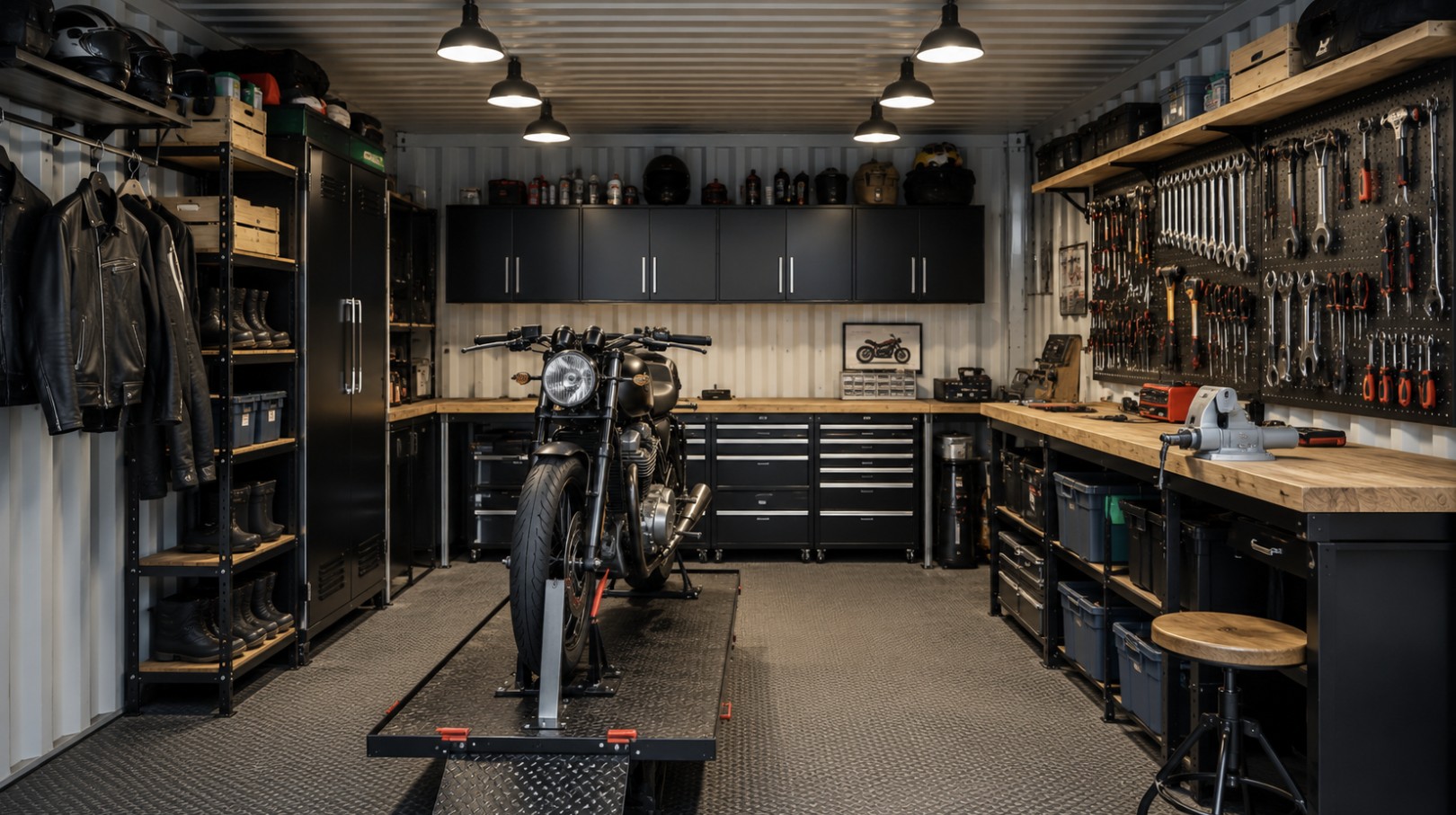
Among motorcycle fans, industrial design is still one of the most beloved styles. Exposed metal surfaces, concrete floors, reclaimed wood accents and open shelving naturally complement the rugged character of motorcycles.
The workshops highlight durability. Steel workbenches, heavy-duty storage cabinets and practical light fixtures create a space that can handle years of use. The visual pleasure is the result of a balance between raw materials and organized places of work.
Many riders like darker color schemes, including black, gray and metallic finishes. These tones add to the industrial feel, while assisting in masking minor wear and stains that naturally occur in active workshops.
Clever Layout Tips to Make the Most of Your Space
Not everyone has a large building to work in. Fortunately, even a small workshop can work very well if the space is planned correctly.
Vertical storage solutions keep tools and supplies within easy reach while saving valuable floor space. Wall-mounted racks are great for storing helmets, riding gear and other items that are used often, and overhead shelving can be used for seasonal items and spare parts.
Some of the space saving features used in the motorcycle workshops are as follows:
| Design Feature | Purpose | Benefit |
| Wall-mounted tool boards | Tool organization | Faster access during projects |
| Ceiling storage racks | Additional storage | Preserves valuable floor space |
| Foldable workbenches | Flexible workspace | Supports a variety of workshop activities |
| Rolling storage cabinets | Mobile storage | Allows easy workshop reconfiguration |
| Multi-purpose shelving units | Parts and equipment organization | Improves efficiency and productivity |
A little careful planning can make even a tiny workshop feel open, organized and incredibly functional.
Functional Work Spaces with Display Areas Incorporated
There are many motorcycle owners who are proud of their bikes and enjoy showing them off when they are not riding. A workshop is a place to work, and a place to display things.
Specialized display areas may have improved lighting, finished floors or special wall treatments. These elements serve to highlight special motorcycles, while still maintaining the functional purpose of the workshop.
Glass display cabinets can hold collectible parts, trophies and vintage riding accessories. When placed correctly, these displays add character without interrupting workflow.
Custom Builds On Display
For builders and restorers, showing off finished projects can be especially rewarding. Custom backgrounds, directional lighting and elevated surfaces help to highlight the craft and details.
They can also serve as a source of inspiration for future projects, thus linking creativity to practical work even further.
Making Social Spaces Comfortable
Motorcycle culture is typically community-driven. Workshops are often places where friends meet up to exchange stories, talk about projects and plan upcoming rides.
Even a small seating area can add to the experience. Visitors will find comfortable chairs, a coffee station and a small table.
Some enthusiasts put their own spin on their workshops by adding sound systems, televisions or motorcycle-themed book collections. These additions promote social interaction while maintaining functionality.
Finding the right balance between work and rest

The most successful workshop designs have a balance of work and leisure. When no projects are underway, the space should be fun, but active work zones and relaxation areas should be separated to keep the space organized.
Easy upgrades such as area rugs, better lighting and climate control systems can improve the workshop’s comfort year-round.
Sustainable Workshop Design Approaches
Sustainability is an important aspect in the planning of modern workshops. Many motorcycle enthusiasts are looking at green solutions that reduce waste and improve efficiency.
LED lighting uses less electricity and gives you great visibility. Natural ventilation systems increase the air circulation and a more comfortable environment is created. Reclaimed materials such as wood, steel, and industrial fixtures add character and support sustainable design practices.
Repurposed structures are also appealing to riders looking for creative workshop solutions. Adaptable spaces are often flexible in their design so they can be adapted to a specific need with little building work.
Safety & Performance Lighting Solutions
Lighting is an essential aspect of workshop safety and productivity. Lower visibility can complicate maintenance and fabrication work and increase the chance of mistakes.
The best results usually come from a layered lighting strategy. General illumination comes from overhead fixtures, task lighting highlights specific work areas and accent lighting draws attention to motorcycles and decorative elements.
Natural light is just as important. Large windows and strategically placed skylights cut down on the need for artificial light during the day and also make the workshop seem brighter and more inviting.
Bringing Your Own Vision to Workshop Design
Every motorcycle enthusiast has their own personal preference, riding experience, and project goals. The best workshops are ones that are practical and efficient, but still reflect those individual interests. Drawing on the rawness of industrial architecture, the charm of vintage racing culture, or the clean lines of modern minimalist design, a good workshop can become a real extension of its owner’s personality.
Design decisions are thoughtful to create a space that lends itself to creativity, productivity and long term enjoyment. If you’re looking for more examples of flexible spaces, riders can check out home design ideas at https://www.ny-engineers.com/blog/3-bedroom-shipping-container-home-design to see how flexible structures can be adapted to a range of functional needs. By integrating intelligent planning with individual style, motorcycle enthusiasts can create workshops that are extremely functional and highly relevant to their passion for riding.